For brokerages & teams
The lead that comes in at 9pm should not wait for somebody to notice it.
This is the whole system pointed at a listing: a site that produces leads, a CRM that decides who to work next, and an assistant that texts and calls the second an enquiry lands.
Speed to lead
Almost every lead you lose, you lose in the first hour.
Not to a better agent, and not on price — to whoever answered first. That is the one part of this business a machine is genuinely better at than a person, because it does not sleep, does not have a showing at 6pm, and does not have forty other things in front of it.
Slide the diagram sideways to see both timelines.
The website
A website that produces business, not just traffic.
Full MLS search on your own domain, every listing its own page, an assistant on the page that answers questions in plain English and asks for a name when it is worth asking. An instant home valuation for sellers, and a rental valuation for landlords that works out a projected monthly range from homes that leased nearby — each one captures the lead. A saved search is a lead as well, and all of it lands in the same system that works it.
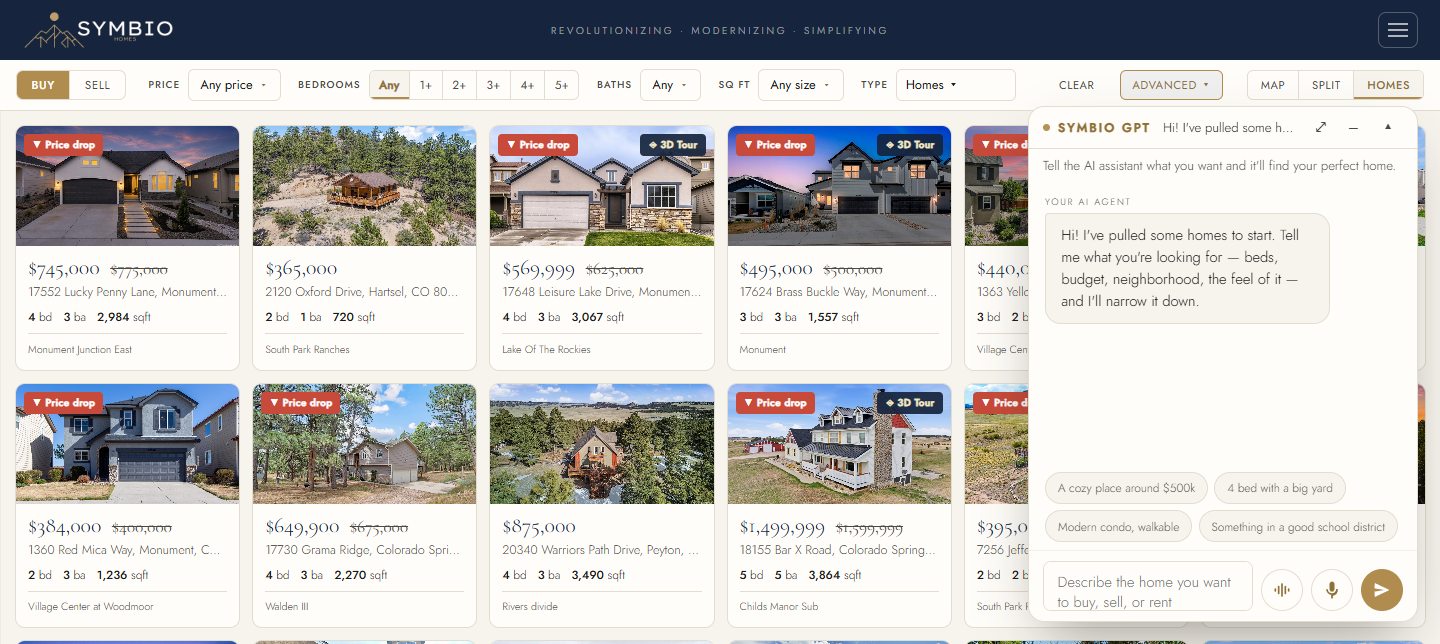
Slide the picture sideways to see it at a readable size.
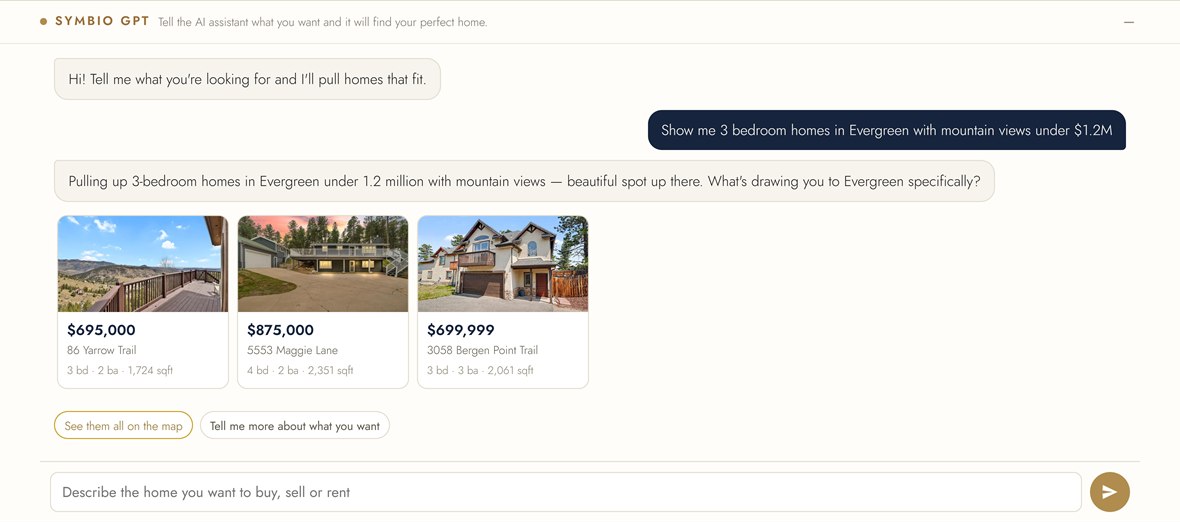
The dialer
Conversations, not dial counts.
The AI caller works a list you choose — new leads, expireds, a circle around an address, past clients — holds a real conversation, and books into the calendar your team already uses. The only number that matters at the end of it is how many people it actually talked to.
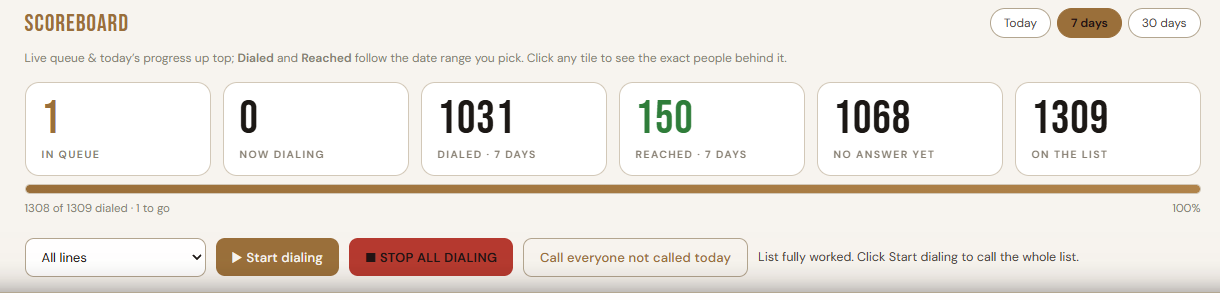
The list underneath
The prospecting data is part of the CRM, not another subscription.
Every expired listing in the MLS, and every property in Colorado with the owner’s name straight off the county record. Names are free. Phone and email lookups are bought one at a time against a budget you set, so this can never quietly spend.
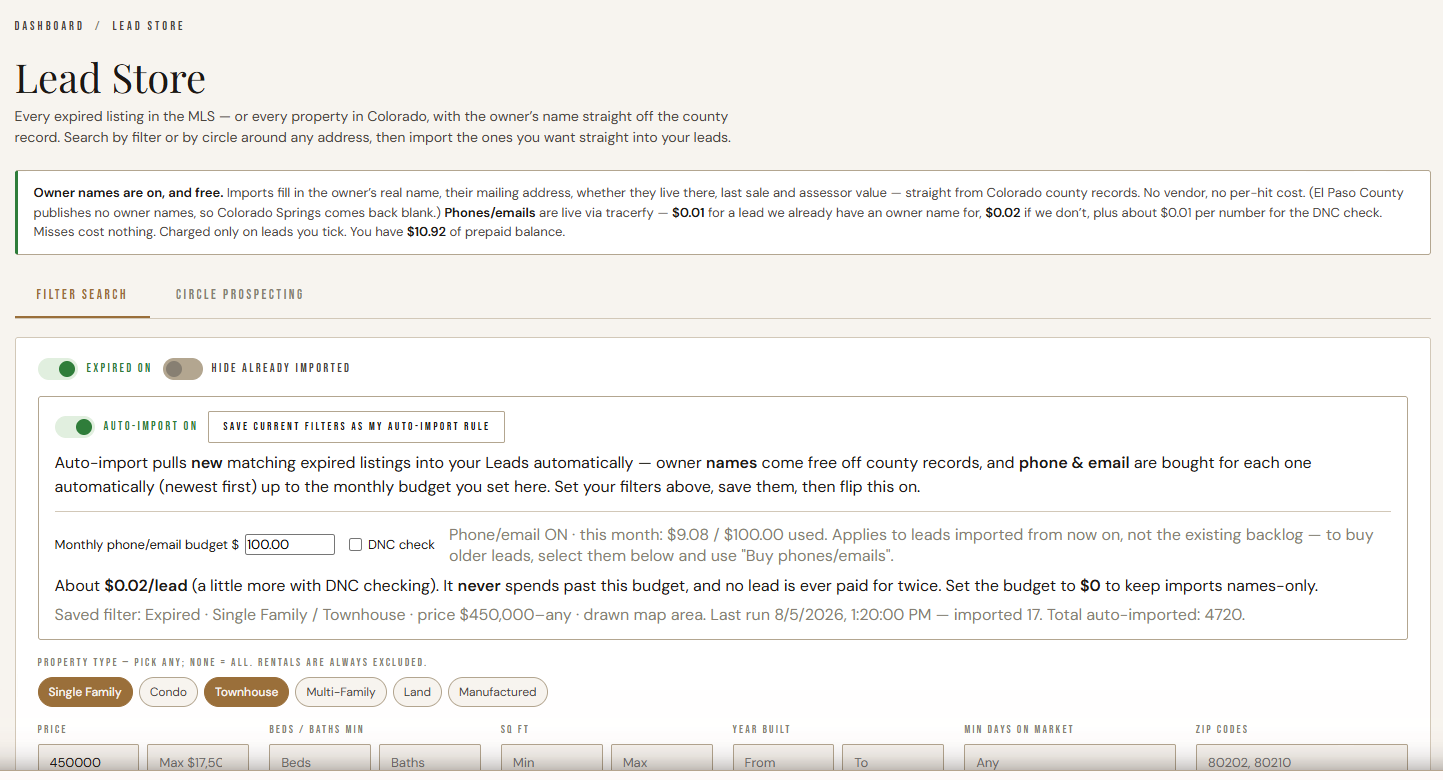
Slide the picture sideways to see it at a readable size.
One record
Every part is looking at the same person.
This is the difference that is hard to see on a feature list and impossible to miss once you are working in it. The website, the texter, the caller, the content, the ads and the paperwork are not six products sharing an export — they are six views of one record.
Slide the diagram sideways to see it end to end.
Also included
The parts nobody demos, that take the most time.
Paperwork
Generated, not assembled
CMAs and listing presentations built from the record, agreements and disclosures sent for signature and filed back automatically.
Booking
Into the real calendar
Two-way sync with the calendar your team already uses, and a public booking page per person that the AI and your clients both use.
Content
Published daily, by itself
Your blog and your social written and scheduled by the same engine that writes our own newsroom — so the site keeps earning between listings.
Every one of these is on the same database as the lead, which is why none of them needs a person to move something from one place to another.
If you run both
A brokerage and a lending arm is one database, not two.
The buyer your agents are working and the borrower your loan officers are working are frequently the same person. On two systems that is two records that never speak, and a referral that depends on somebody remembering. Here it is one record, and the handoff is just a field.
Slide the diagram sideways to see it end to end.
For brokerages & teams
Which part of this is your team missing?
That is the conversation. Tell us what you run on today and what happens to a lead after it arrives, and we will tell you honestly what is worth adding first.
See how packages are built, or reach us directly at Support@symbiohomes.com / (720) 955-7770.